Useful Information
Everything you need, always with you
Useful numbers
Check-in · Check-out
Welcome
“Welcome to Hotel Moresco, surrounded by the colors and scents of Sardinia.”
Here, time slows down, giving space to your moments of relaxation and well-being. Our team will always be at your disposal to make your stay pleasant and memorable.
Reception
Open 24 hours
Useful numbers
To contact Reception, dial 9 followed by OK.
Phone: +39 0789 050013 (also whatsapp) or by mail: ricevimento.moresco@hostedahotels.it
Wi-Fi
Network: Hotel Moresco WiFi · Password: mor3sco2021
LaVISTA Restaurant
We are pleased to welcome you to our LaVista Restaurant.
Breakfast: 07:30 –10:00
Lunch: 12:30 - 14:30
Dinner: 19:00 – 22:00
Offering à la carte menu, daily menu, tasting menu, and traditional Sardinian cuisine.
Hotel Moresco guests receive a 10% discount on food.
Room service is available upon request (extra charge).
LaVISTA Cocktail Bar
Open from 10:00 AM to 11:00 PM.
Enjoy a wide selection of cocktails and aperitifs.
Bistrot service available from 12:30 PM to 7:00 PM.
Concierge service
Reception staff is available for transfers, rentals, excursions, and any requests
Car parking
€ 20/night
Motorbike/Scooter parking
€ 10/night
Safe
A safety box is available in your room with a personal code.
Instructions are inside.
Telephone
For internal calls, dial the room number preceded by 1
Minibar
All rooms are equipped with a minibar (extra charge).
For details, please scan the QR code or contact Reception.
Rena Bianca Beach
Hotel Moresco is located in front of Rena Bianca beach, accessible through a private path.
Since June 1, 2024, access to Rena Bianca beach is limited and subject to a fee.
Hotel guests have free and unlimited access to the shoreline (no stay on the sand).
For full beach access, tickets can be purchased via the official website.
Solarium Le Dune - White Umbrellas
Free access with limited availability.
Please do not reserve sunbeds with personal items or towels, items will be removed.
Solarium Le Dune - Afrikan Area (Paid – Reservation Required)
Afrikan Package (1 umbrella + 2 sunbeds)
May/October: €10/day
June/September: €20/day
July/August: €35/day
Solarium Le Dune - Cabanas (private gazebo - Paid – Reservation Required)
May/October: €30/day
June/September: €50/day
July/August: €80/day
Beach Towels
A towel card was provided at check-in.
Towels are available at the Beach Point (08:30 – 19:30).
1 towel per person per day allowed.
Failure to return the towel card will result in a €25 charge.
Beach Point
It is available from 8:30 a.m. to 7:30 p.m.
From 12:00 p.m. to 7:00 p.m., a snack service is available at the Beach Point.
Notice
The water feature on the LaVista terrace is decorative only and not suitable for swimming.
Pet friendly
Small dogs (max 10 kg) are welcome.
Allowed only on the terrace and on a leash.
Final cleaning and sanitation fee applies.
Lost & Found
Items are stored for 90 days.
After that, they will be donated to charity.
Emergency Procedures
Rooms are equipped with fire alarm systems.
Emergency exits are shown on the maps inside each room.
In case of emergency, evacuate without using elevators.
Smoking is strictly prohibited throughout the property
ZTL and Parking
In Santa Teresa di Gallura, the Limited Traffic Zone (ZTL) protects the historic center around Piazza Vittorio Emanuele I, banning unauthorized vehicles.
- Area covered: The center streets and the area surrounding Piazza Vittorio Emanuele I.
- Recommended parking: Leave your car in the parking lots just outside the ZTL, such as the Via Valle d'Aosta area, and walk to the center.
- Permits: If you have personal needs, you can request access permits through the Municipaliy Online Portal.
In the summer, you can find paid parking lots close to various beaches in Santa Teresa Gallura that cost €1/€ 2 per hour.
The method for paying and managing blue-stripe parking spaces in Santa Teresa di Gallura is EasyPark (parking meters available for cash or credit card payments, or via app).
How to use EasyPark for parking
- Quick activation: enter your vehicle license plate number directly via EasyPark.
- Geolocation (if using the app): the application automatically recognizes the specific parking zone you are in within the town center.
- Flexible management: you can extend your parking time or stop it early, paying only for the actual minutes used.
Beaches
 TOP
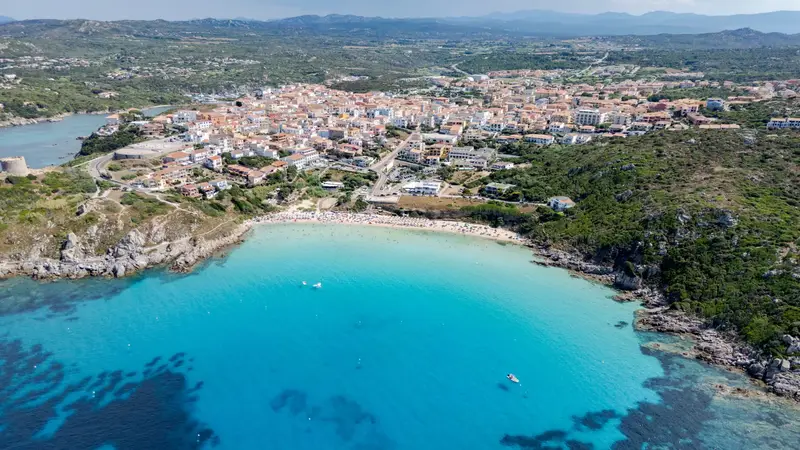
TOPRena Bianca Beach
100 mtThe village beach
Of all the beaches in Santa Teresa Gallura, the most famous is certainly Rena Bianca. It stretches about 700 meters wide, at the end of a steep slope that from the town's central square sinks toward the sea and widens its horizons toward nearby Corsica. The fine white sand, the crystal-clear water whose level gradually annalises generating infinite shades of blue and turquoise, the tower of Longonsardo that stands like a vigilant sentinel, the dunes behind it and the cliffs that envelop it on the sides: everything contributes to making Rena Bianca a corner of paradise.
In addition to all this, Rena Bianca is the beach of the teresini. Even on sunny winter days, when the air is cold but the sky blue is vivid and intense, Rena Bianca is the little piece of wonder that anyone can easily reach. All it takes is a walk to the sea, until you overlook the empty expanse of pale sand, to Restoring peace to the senses and the spirit. Here the wind blows powerful and free, carrying scents of cistus and broom, and that smell of Sardinia that anyone who has ever set foot on the island has learned to recognize.
However, Rena Bianca as we know her Was in danger of being compromised forever. Global warming, uncontrolled construction, overcrowding and consequent outsized anthropogenic load have put a strain on the dune system that makes Rena Bianca as beautiful as it is fragile. For these reasons, the city administration decided to take action to limit the risks of the total disintegration of the strand, and as of June 1, 2024, the number quota and entry by reservation and fee. The whole operation was based on an environmental assessment report, and the proceeds from the entrance fee were reinvested in order to Adapt the use of the beach both in terms of compliance with the new regulations and in terms of safety, hygiene and environmental decorum.
-800x533.webp) Pet friendly
Pet friendlyCala Grande Beach (Moon Valley)
4 kmThe beach of Cala Grande is reached through a suggestive itinerary in the Moon Valley, so called because of the giant white granite boulder, shaped by the millenary erosion of the wind. The highest reaches 128 meters above the sea level and it is known as The Skull.
A fantastic scenario that surrounds the numerous coves and luxuriant Mediterranean vegetation where it is still possible to find a hippy community that since the 1960s has been established in this magical place, immersed in the beauty of nature and away from the hustle and bustle of everyday life.
Still today it is possible to meet here travellers from all over the world, artists, musicians and people who reach the valley in search of peace and serenity with an adventure spirit. Unmissable!
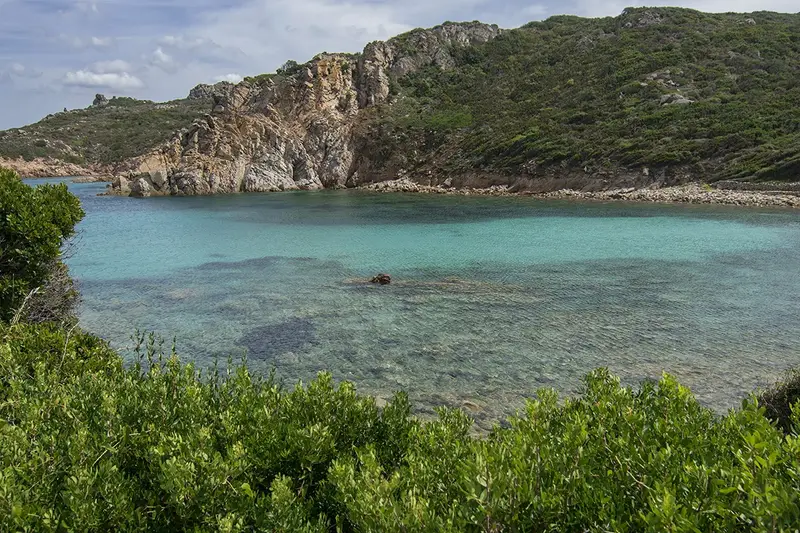
Cala Sambuco beach
4,7 kmCala Sambuco is a small beach in a half-moon shape, characterized by clear sand and a crystalline sea whose colour varies from green to light blue to dark blue. The seabed is characterized by pebbles and rocky outcrops coming out from the water. All around, the Mediterranean maquis colors the landscape with an intense green.
Quiet and remoted, this free beach has every kind of services and is particularly appreciated by the lovers of snorkeling.
To get there from Santa Teresa di Gallura you should proceed toward the East, following the indications for Marazzino and turn left following the signs for the restaurant La Diana, proceed straight ahead, pass the intersection and turn left and then right on a dirt road called Cala Sambuco Road.
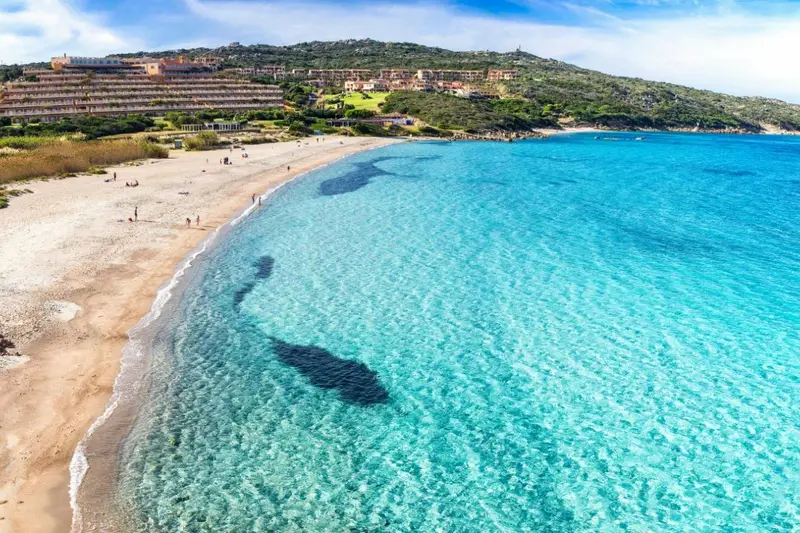
La Marmorata beach
3,9 kmMarmorata Beach, with its low seabed of clear sand and the splendid sea of green and turquoise waters is surely among the most beautiful in Northern Sardinia.
To complete the magnificent panorama, there is the Marmorata islet reachable swimming from the coast and where you can visit the remains of an ancient Roman quarry.
The beach is equipped with every kind of service: wide parking space, bars, restaurants, possibility to rent beach umbrellas, beach chairs and pedalos.
It is also possible to practice snorkeling, windsurfing and other water sports, while lovers of trekking can experience the numerous paths that lead in the enchanting bays nearby.
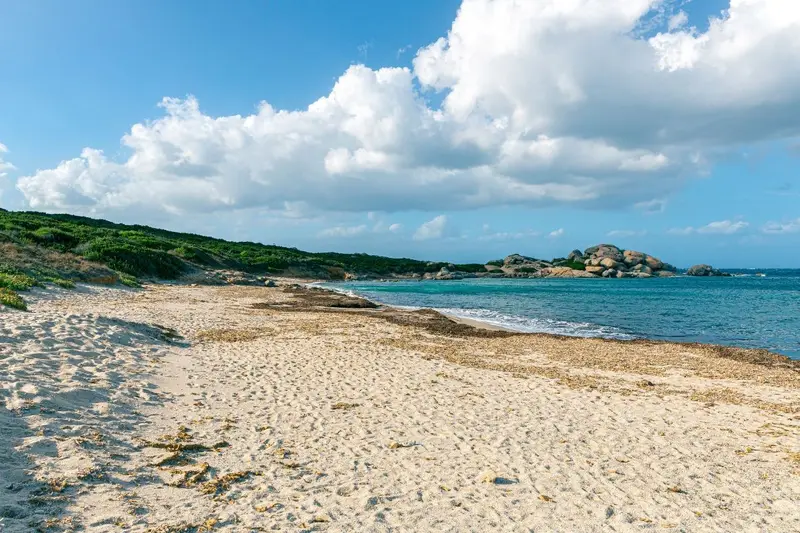
La Licciola beach
7,3 kmA few more kilometers to the west, in the locality of Valle dell'Erica, is the beautiful beach of La Licciola.
The beach is characterised by a clear sand with medium grain and some rocks that make it even more impressive. The crystalline sea has a shallow water and colors that go from green to deep blue, as one moves away from the shore.
From here you can also enjoy a breathtaking view that sweeps from the Colombaia cliffs until the Spargi island which can be glimpsed at the horizon in all its beauty.
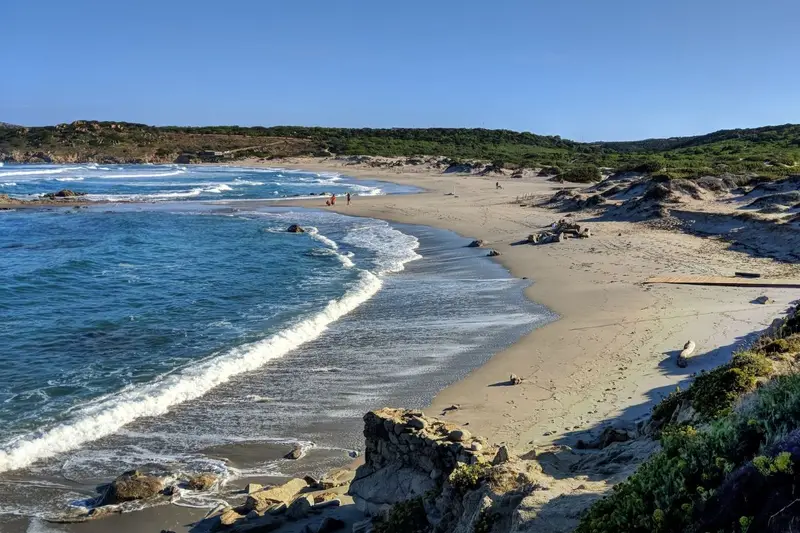
La Liscia Beach (Porto Liscia)
20 kmPorto Liscia is the first beach you'll find leaving the area of Palau and going north-west towards the coast of Santa Teresa di Gallura.
This sandy shore is characterized by a beautiful golden granitic sand and it is about 2-kilometres long, starting from a cliff dominated by Mediterranean maquis until the mouth of the river Liscia.
The sea, instead, is distinguished by a shallow water with crystal clear waters of iridescent shades between the emerald green and the light blue. On the beach, finally, it is possible to hire sunbeds, beach umbrellas and take a break in one of the snack bars.
Markets
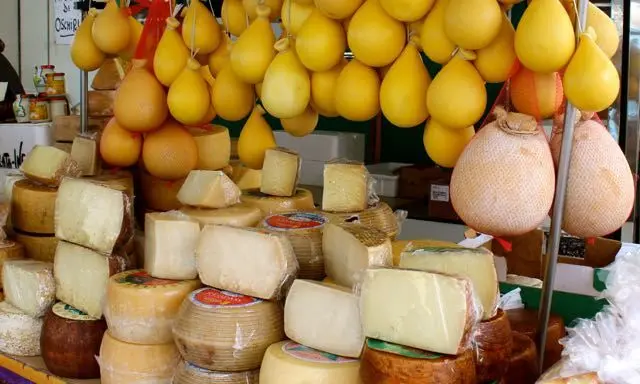
Santa Teresa di Gallura
250/800 mtThroughout the year, every Thursday in Piazza Bruno Modesto, the weekly market takes place from 8 am to 2 pm, where you can find local food and wine specialities and clothing.
The evening market runs from 1 July to 15 September in the streets of the historic centre, where you can find local specialities, costume jewellery and handcrafted items.
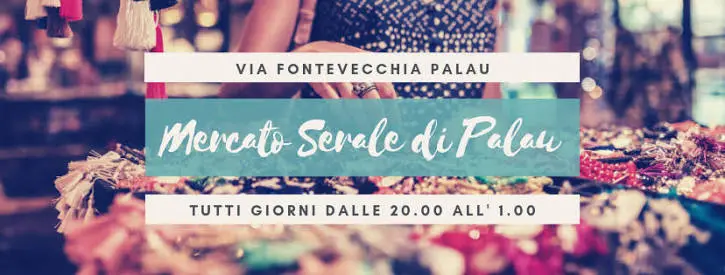
Palau
24 kmThe Palau Summer Evening Market is one of Gallura's main meeting points for night shopping. It takes place every evening during the summer season, offering a wide choice of local handicrafts and Sardinian specialties until early October, from 8:00 p.m. to 1:00 a.m.
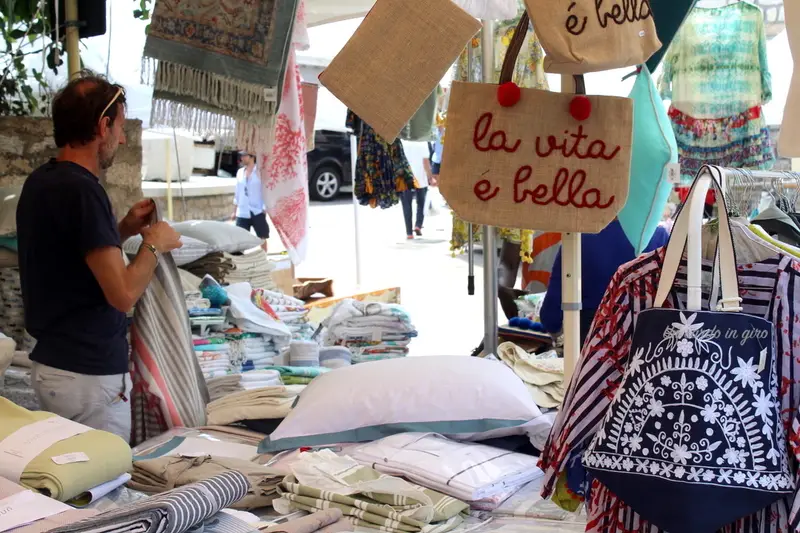 top
topSan Pantaleo
48 kmSan Pantaleo market: the absolute leading player in Costa Smeralda's markets, the San Pantaleo Thursday market (from 8am to 1pm) is the main destination for tourists and non-tourists alike. The alleys and small squares of this suggestive ancient Gallura village are filled with original works of art made in Sardinia.
Local products
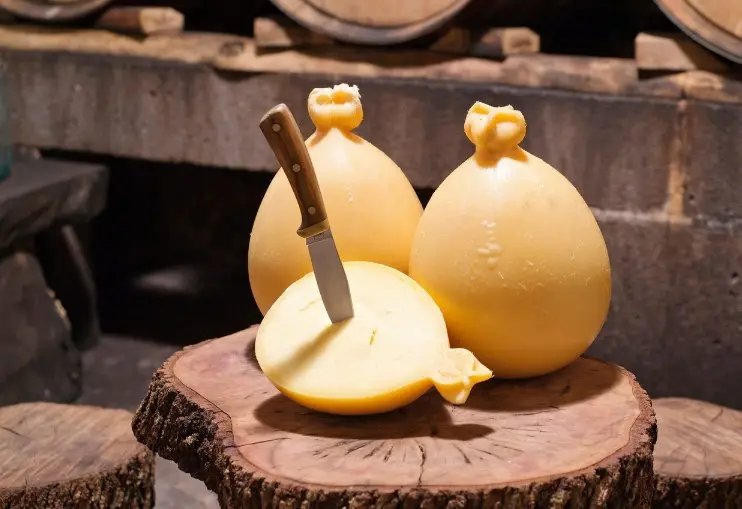
Typical Cheeses
0Pecorino Sardo PDO is a versatile cheese available in two styles: "Dolce" (aged 20-60 days) and "Maturo" (aged over two months), offering flavor profiles that range from delicate to bold and spicy. It's made from whole milk from native sheep, local lactic cultures, and natural rennet, following a strict PDO specification that ensures quality and authenticity. Sardinian dairies use wet or dry salting, followed by aging in controlled environments that preserve flavor and texture.
Axridda is a rare cheese made only between January and May in Escalaplano (Gerrei, Cagliari), using raw sheep or goat milk - sometimes blended. Dating back to Roman times, as noted by Pliny the Elder, the cheese is coated entirely in local clay mixed with lentisk or olive oil to protect it during the hot summer. This produces a hazel-gray rind and a semi-hard, crumbly, aromatic paste that becomes spicy when aged over six months.
Among the most intriguing Sardinian cheeses, Casizolu - also known as Tittighedda or Figu - stands out for its surprising versatility. It is made from raw milk of native cows (Sardo-Modicana or Bruno-Sarda breeds) raised on pasture. It has a pear shape with a "head" and an elastic texture typical of stretched-curd cheeses. Produced according to local artisanal standards, it offers a flavor profile that evolves with aging: initially sweet and mild, it becomes progressively bolder, herbaceous, and slightly spicy.
Sheep's Milk Casizolu, or "Pirittas", is a traditional sheep cheese from the central hills of Sardinia, made exclusively in areas like Goceano and Marghine with raw milk from Sardinian breed sheep raised in the wild. Its stretched-curd paste has a semi-soft texture, pale white or straw-yellow color, and a thin smooth rind. The flavor is delicate, with characteristic notes of sheep’s milk that become more pronounced after just seven days of aging. Classified as a Traditional Agri-food Product (PAT), it comes from a short supply chain, often family-run, that values local artisanal production.
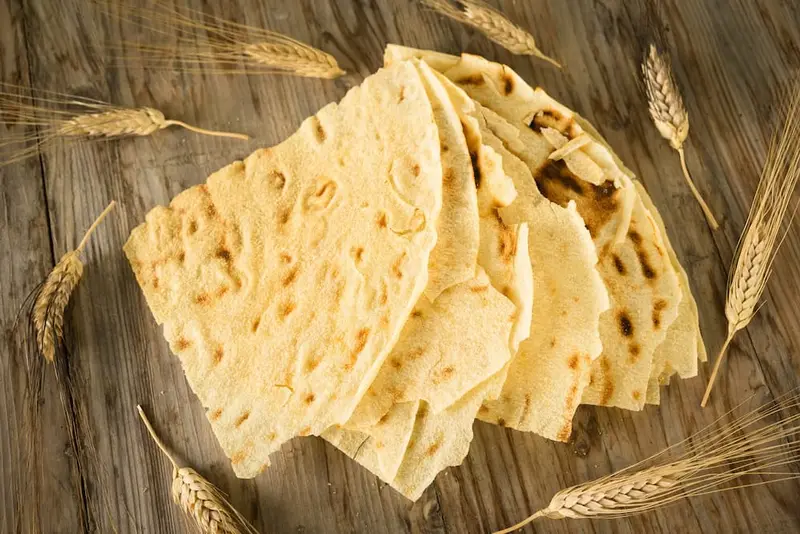
Sardinian bread
0The most famous is carasau, the music paper with large, round, very thin discs that seem to make musical sounds. They make it in Barbagia but even there it is not always the same: in Ollolai it is called pane 'ine with smaller sheets, in Orani it is softer and folded on itself and becomes pane lentu or modde, in Mamoiada the dough is made with potatoes.
Ogliastra, on the other hand, is home to the smaller, thicker rectangular sheets of pistoccu, the bread favoured by shepherds for its freshness even months and months after its double baking. The huge loaves of civraxiu of Sanluri, which in some villages are smaller and become su moddixi or moddizzosu, are best enjoyed fresh from the oven
‘Special' breads are also prepared on special occasions. Making the bread was and still is a community ritual for the women of the family, which also involve neighbours. Children and adults alike all have a specific role based on experience and talent: the most gifted decorate su coccoi, special semolina bread. The most common is 'leafy' or crested like is coccois de pitzus, prepared exclusively for festivals with decorations inspired by nature (pomegranate, bouquets of flowers, fish, birds, turtles). Then there are the coccoi for the children: they are shaped like necklaces, keys, animals. Every holiday in Sardinia has its own bread: at Easter, su coccoi cun s'ou with a boiled egg is baked, at New Year's su candelariu and sa pertussita. Sa cozzula, in the shape of a crown, is served in church for weddings, while sas coccas are the flatbreads of the Nuoro ferragosto. The rich tradition of bread-making and the many different types of bread decorated as true works of art can be seen in the bread museums in Arzachena, Borore, Monteleone Roccadoria, Pompu, Sanluri, Siddi and in Olmedo, where the bread nativity scene is set up.
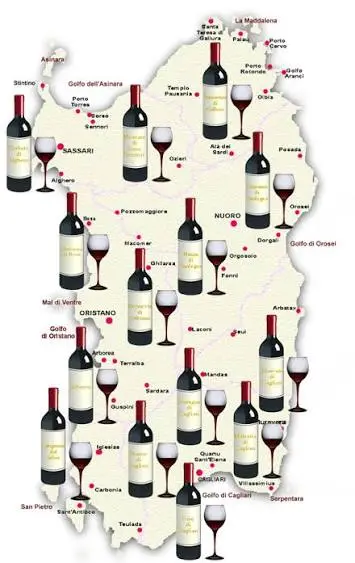
Sardinian
0Cannonau is Sardinia's most characteristic vine, the production of which can be attested to since the late Middle Ages. Its original and historical territories are Ogliastra and Barbagia. It is cultivated in the rugged peaks of the Trexenta and Gerrei areas, in the rolling hills of the Marmilla and in the undulating expanses of Parteolla, respectively in the middle and lower Campidano. The path on the discovery of full-bodied reds passes from the cellars of Dolianova, Serdiana, Lunamatrona and Sanluri, before heading to the countryside of Sarrabus, Castiadas and Muravera, returning to the origins of the Cannonau, Cardedu, Jerzu and Ulassai in Ogliastra, the ‘land of centenarians’. Then further north, in the Barbagie di Ollolai and Nuoro: in Dorgali, Orgosolo, Mamoiada and Oliena, home of the robust Nepente, glorified by D’Annunzio. Cultivated in the westernmost part of the Barbagie, in Atzara and Sorgono, is the Mandrolisai, which gives its name to the historical region, a wine territory par excellence. Another renowned grape variety, once quite ‘working class’, hails from these and other areas: the bovale, called nieddu mandroni (‘black idleness’) by the old winemakers as a sign of contempt, today it is an oenological star at an international level.
Eighty per cent of the Italian land cultivated with Vermentino is in Sardinia, being the most representative vine of the island together with the Cannonau. Most of the rows of the famous and certified vine stretch throughout the north, from Olbia to Alghero, through Gallura, Monte Acuto, Logudoro, Anglona, Romangia and Nurra. The historical and most famous wineries of DOC and DOCG whites are, in addition those in the two main cities (Olbia and Alghero), also in Arzachena, Berchidda, Luogosanto, Monti, Santa Teresa Gallura, Sorso Sennori, Usini and Olmedo. Other delicious products from northern Sardinia, especially from the Sassarese and Nurra areas, are Cagnulari, Torbato and Moscato. Malvasia is a fine and exquisite wine typical of a small central-western area. There are several versions to savour, from naturally dry or sweet to the rarest dry or sweet fortified wines. The itinerary exploring this area crosses all the towns of Montiferru and the Planargia sub-region, from Cuglieri to Scano Montiferro, from Flussio to Modolo, from Sennariolo to Suni, from Tinnura to Tresnuraghes right through to Bosa, one of the most beautiful villages in Italy, whose coloured houses extend up a hill surmounted by the medieval castle of Serravalle and reflected on the Temo river. A little further south, you can discover another limited production, being that of Vernaccia, an indigenous vine cultivated since the Nuragic age. The most significant wineries producing exquisite wine are in Oristano, Cabras, Solarussa, Milis and Baratili San Pietro. In Oristano, there are also cellars of the agricultural hub par excellence: Arborea.
Sardinia is not only about Cannonau and Vermentino, but also offers other vines that date back thousands of years, today giving rise to high-level productions. The Monica grape variety is the most common red throughout southern Sardinia. The largest production area extends between Cagliari, Iglesias and Oristano. The Denominazione di Origine Controllata (DOC - Denomination of Controlled Origin) distinguishes the Monica produced in Sardinia and Cagliari, the itinerary for which sets out from the capital before winding through the Campidano countryside. Nuragus, a white DOC wine, is also very common. This vino originates from an ancient vine, perhaps native and domesticated or imported by the Phoenicians. The vine is cultivated mainly in Marmilla, Sarcidano, Parteolla, Trexenta and Gerrei. You can taste these two wines along with the dessert wines, Nasco and Moscato, in the cellars of Dolianova, Serdiana, Soleminis, Ussana, Senorbì, Settimo San Pietro and Monserrato. Sulcis signifies Carignano. This vine, imported from Piedmont in the Savoy era, found its ideal habitat in the calcareous and sandy soils of the south-western corner of the island, having perfectly harmonised with the environment. It has gone from an everyday wine to a production with great personality and high quality, from a historically ‘strong’ red to pair with a meal, without having an excessive percentage of alcohol. The route on its discovery is part of the Iglesiente and winds its way through the peaks of Sulcis, through to the coasts. On the Isola di Sant’Antioco are some of the most famous wineries. The other main ones are those winding along the junction that leads to Giba, through Narcao, Perdaxius and especially Santadi.
Curiosities & Traditions
Island cures 5 SARDINIAN HERBS YOU MUST KNOW (AND USE)
ovunque/everywhereNatural remedies are part of the island’s ancient tradition. Everyone knows the story of the family from Nuchis, near Tempio, in Gallura, which has the recipe for a miraculous ointment that heals severe burns. The big pharmaceutical companies have offered them dizzying figures to get their hands on it, but the family refuse to give in, and continue to heal people without asking for anything in return.
So this is the start of a little overview of the main Sardinian herbs used in cosmetics and herbalism and some of their therapeutic properties.
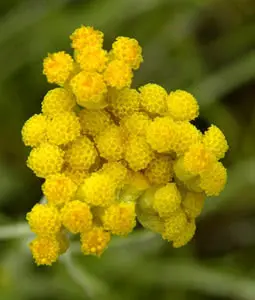
Helichrysum italicum
ovunque/everywhereHelichrysum (in Sardinian Erva or Scova di Santa Maria) is perhaps the most beneficial plant of all. To the French, who are great buyers of Sardinian helichrysum (Chanel being one example), it is quite simply “l’immortelle”. It is antioxidant, detoxifying, conditioning, anti-inflammatory and soothing for allergic reactions. The essential oil is miraculous when used on hematomas and also has powerful healing, mucolytic, expectorant and analgesic properties. Helichrysum is used to make face serums and creams for mature, dry and damaged skins. It is considered excellent at preventing sun spots, wrinkles, stretchmarks, and protecting the skin against UV rays, which is why it is appears on the ingredient list of so many sun creams. The ancient Egyptians even mixed it with honey as an antidote to snake bites.
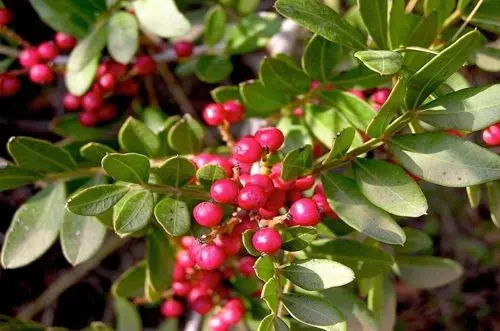
Mastic
ovunque/everywhereMastic is known locally as stincu, listincu and chessa (in gallurese) just for starters. The mastic tree’s small red berries, branches, leaves and resin are all used – very much in the same way as many of the other shrubs in the Mediterranean brush. Mastic is a sort of miracle plant: conditioning, healing, insect-repellent and antioxidant. It also soothes muscular and joint aches and pains. It is rejuvenating, hydrating and antibacterial. Mastic berry oil is very much a Sardinian speciality as it has been made on the island for thousands of years. It is rich in omega 3, 6 and 9, and has powerful healing properties. It can also be used in cooking to add flavour to meat, roasts and fish or as a condiment for raw salads. Mastic berry oil has long been used instead of olive oil in Sardinian cooking because of the fact that its distinctive, heady flavour goes so well with food of all kinds and is, as a result, also a favourite with gourmet chefs. It is also miraculous in easing ulcers and all kinds of stomach upsets. Mastic berry oil became hugely popular after Dan Buettner revealed in National Geographic that it was one of the essential components of the diets of Sardinian’s famous centenarians. Cosmetic products containing mastic essential oil, which is extracted from the branches and leaves of the tree, is excellent for treating wrinkles and for soothing skin that’s been exposed to wind and sun. When cut, the trunk of the mastic tree yields a clear, sweet resin known simply as mastic which was once chewed as a breath freshener and to strengthen the gums. The most precious mastic of all came from the Greek island of Chios which the Genoese were trading in by the 14th century.
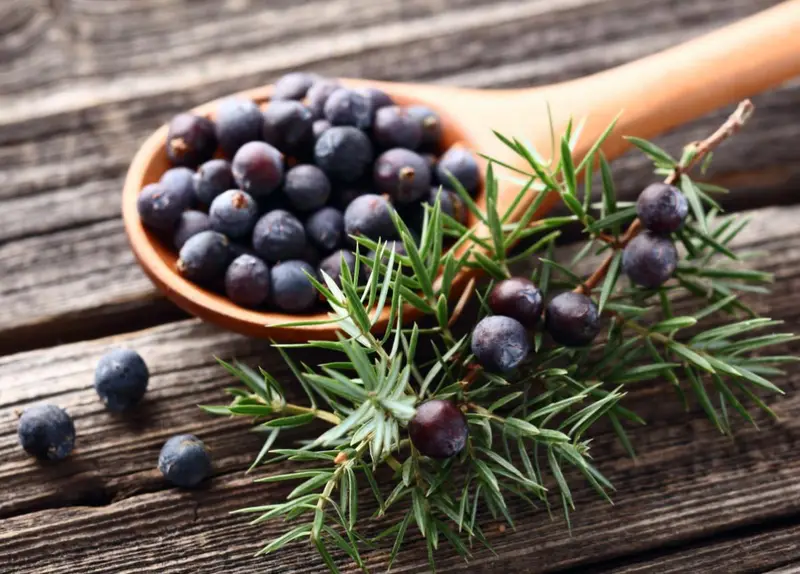
Juniper
ovunque/everywhereOf the juniper bush (in Sardinian Ghinìperu, Nìbaru or Nìbanu), the berries, young shoots and wood are all used to make essential oils with powerful curative properties. Made into creams, oils, soaps and other products, juniper acts as an extraordinary tonic for the skin, combatting spots, blemishes, oiliness and stretch marks. Juniper-based products are ideal for use after sport too. The essential oil is also used in inhalations to help with coughs while Juniper herbal infusions (when parts of the plant are infused in oil for a long period of time) are an excellent anti-inflammatory and analgesic. It can be used as a natural remedy for headaches and all kinds of joint pain. Lastly, the distillate made from juniper is widely used with tonic water to raise the spirits and also taken neat as an aid to digestion. Or at least that was the claim made by the Dutch pharmacist said to have invented gin in the 18th century.
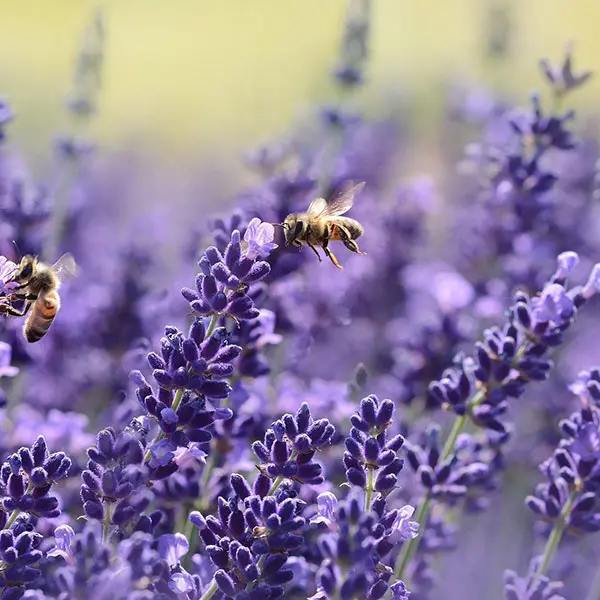
Lavender
ovunque/everywhereWild lavender, medicinal lavender, the genuine article, is known by the poetic name of Archimissa in Sardinian. It is a sweet herb with an incredibly gentle, subtle and natural effect on the psyche. Relaxing and fragrant, it is a digestive and a carminative. Conditioning, sedative, insect-repellent, calming, sedative, pain-relieving, and soothing, lavender is used in cosmetics and in herbal medicine. Its essential oil is highly effective in dealing with stress, anxiety, insomnia and mild depression. Insect repellent and healing, lavender essential oil fights fungal and other infections, and relieves rheumatic and joint pain. It is also useful for back pain, neck stiffness, headaches (particularly tension-related), sprains and bruising. As with all essential oils, excessive use can cause reactions. Lavender is an exceptionally good addition to creams and oils too as it combats spots and dandruff, stimulates hair growth and circulation in general. It is also hydrating, purifying and improves the elasticity of the skin. Last but not least, it is a good natural anti-wrinkle aid.
Myrtle
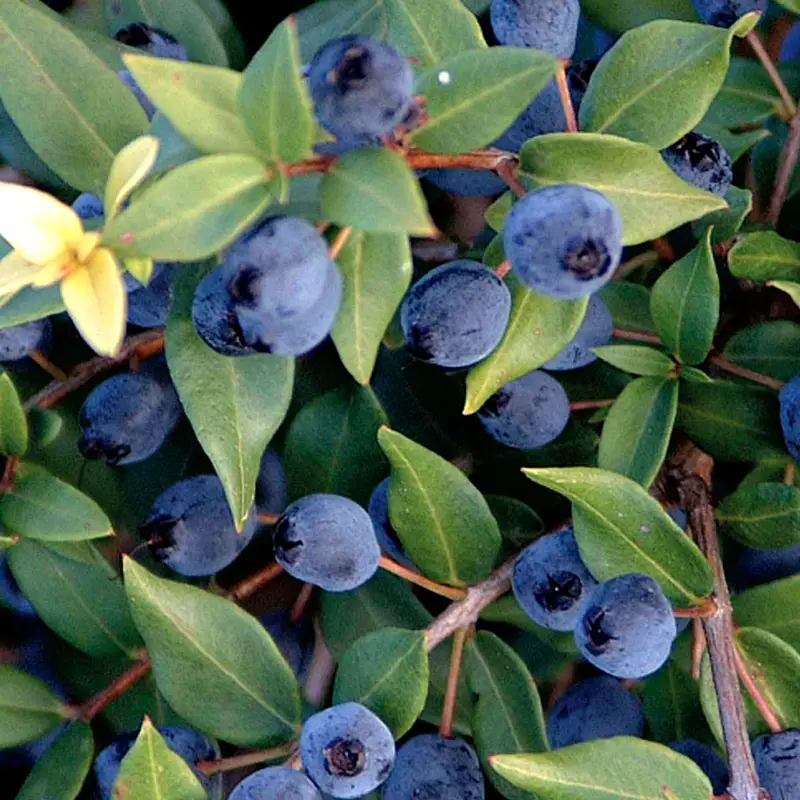
ovunque/everywhereThe leaves and berries of the myrtle tree (Murta in Sardinian) are used for their fragrance and astringent and anti-insect properties. Myrtle essential oil is widely used in cosmetics because of its balancing action on sensitive and blemished skin. It also often appears as an ingredient in toothpastes, and thanks to its skin balancing properties, is excellent as an active ingredient in shampoos and conditioners. The myrtle bush is unmistakeable as its bright green leaves dotted with dark berries make it one of the most spectacular sights of the Mediterranean autumn. Acqua Angelica, a distilled water containing myrtle, was in use in Europe by the 16th century as an astringent face and body skin tonic. Myrtle liqueur is deemed by many to be a very effective remedy for doubt or confusion
_1.webp)